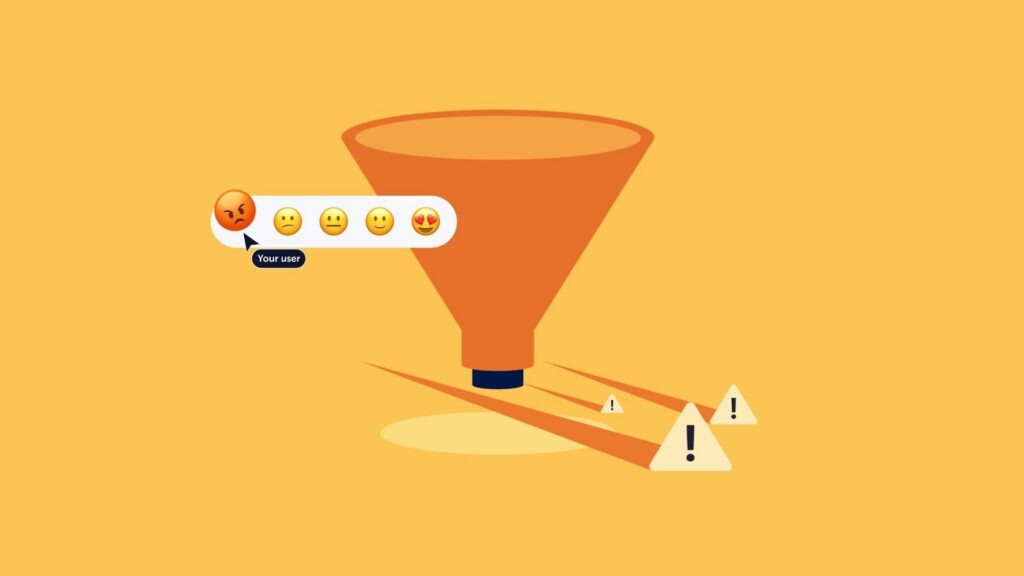
Sixty percent of searches now end without a click. This is what’s known as zero-click search: when someone gets the information they need directly from the search results or an AI-generated answer, without visiting another website.
People haven’t stopped searching. But increasingly, AI can give them the answer before they ever need to visit a website. ChatGPT, Perplexity, Google AI Mode: these are the new front doors, and most of the time they never open into your site at all.
If you’re still building your funnel around the assumption that top-of-funnel traffic is where the story starts, it’s time to rethink the model.

The funnel isn't shrinking. The definition of "top" is changing.
For years, marketing measured the top of the funnel by volume: how many people found you, how many clicked through, how many “researched” before they bought. Zero-click search is changing that first layer of the funnel. When someone can get a comparison, a summary, or a recommendation directly inside an AI chat window, the pressure to click through and read a blog post to “learn more” disappears.
What’s left on your site is a smaller, more concentrated group of visitors. But here’s the part that should change how you think about it: they’re not colder. They’re often warmer. If someone bypassed AI’s answer and still chose to land on your page, they came with a reason. They wanted to see something AI couldn’t show them: your actual product, your actual pricing, your actual proof.
Fewer visitors. Higher intent. That’s not a funnel problem. That’s a signal you’re currently wasting if you’re still measuring in clicks.
It also makes understanding the broader customer journey more important. The visit to your website may no longer be the beginning of that journey. It may happen much closer to a decision.
In a zero-click search world, clicks don't tell you why visitors leave
Traditional analytics is built to answer “did they get here” and “did they convert.” Those are outcome metrics. They’re binary, and they’re retrospective. They don’t tell you anything about the fifteen seconds where a visitor hovered over your pricing table and then closed the tab, or the moment they rage-clicked a broken filter on your product page and bounced.
That in-between space, the hesitation, the re-reading, the scroll-back-up-to-check-something, is where conviction is won or lost. And it’s invisible to a metric that only counts what happened at the very end of a session.
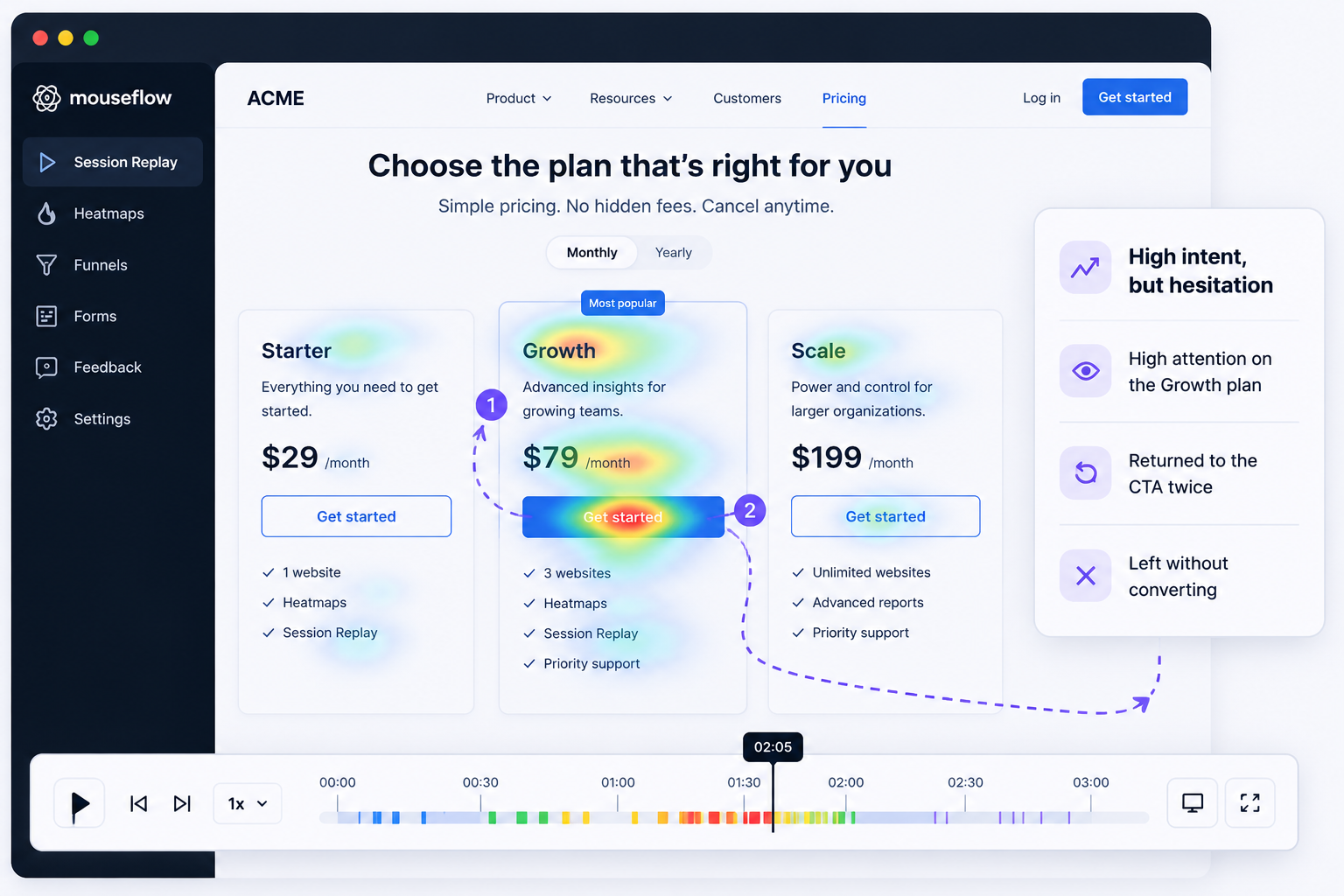
This is exactly the layer behavioral data is built for. Session Replay shows you the visitor’s actual path through the page: where they paused, what they ignored, what confused them. Heatmaps show you whether your value proposition ever actually got seen, or whether it was buried under a hero image nobody scrolled past.
Neither of these care where the visitor came from or what campaign UTM brought them there. They show you what happened once someone actually showed up, which, in a zero-click world, is increasingly the only part of the story you can still fully observe.
What "measuring conviction" actually looks like
Shifting from clicks to conviction doesn’t mean throwing out your funnel reporting or your existing CRO efforts. It means adding a layer underneath it that most teams currently skip:
- Watch the sessions that convert, not just the fact that they converted. What did the winning path actually look like? Which page sealed it?
- Watch the sessions that almost convert. Someone who reaches checkout and stalls is telling you something a conversion rate never will.
- Track friction, not just funnel stage. Rage clicks, dead clicks, and excessive scrolling are conviction leaking out of your page in real time.
- Treat every session as high-intent until proven otherwise. In a world with fewer, more deliberate visitors, the cost of misreading one of them is higher than it used to be.
None of this shows up in a dashboard built to count clicks. It shows up when you actually watch what people do.
The funnel isn't dead. It's just not the whole picture anymore.
AI search didn’t break marketing measurement. It exposed how much of it was always downstream of the click: easy to count, but never the whole truth about why someone did or didn’t buy. As fewer visitors reach your site through traditional search, the ones who do become the clearest window you have into what’s actually working.
The teams that adapt fastest won’t be the ones with the most sophisticated attribution models trying to explain a funnel that’s gone dark. They’ll be the ones who stopped trying to attribute the unattributable and started paying attention to what’s still fully visible: the session itself.