
Collecting customer feedback is exciting, but before it becomes actionable, it needs to be analyzed. Understanding sentiment, identifying patterns, and structuring insights across large volumes of responses can quickly become time-consuming.
This is where AI comes in. ChatGPT can automate key parts of feedback analysis, helping you categorize sentiment, detect themes, and extract insights much faster.
However, while tools like ChatGPT can show how users feel, they don’t fully explain why they feel that way. To get meaningful insight, sentiment analysis should be combined with broader user feedback that provides context behind the data.
In this article, we’ll look at how to use ChatGPT for two of the most time-consuming parts of feedback processing – sentiment analysis and text mining – using practical prompts you can apply right away.

What is sentiment analysis in customer feedback?
Sentiment analysis is the process of evaluating the emotional tone behind feedback. It helps answer a simple but important question: are users generally satisfied or dissatisfied?
When feedback is collected as open-ended text responses, analyzing sentiment manually can be difficult. ChatGPT makes it possible to quickly classify responses as positive, negative, or neutral, giving you an overview of customer perception at scale.
While this provides a useful starting point, sentiment alone is not enough. Knowing that feedback is negative is helpful, but understanding the underlying reasons is what makes it actionable.
Best ChatGPT Prompts for Sentiment Analysis
For sentiment analysis, you might use prompts like:
“Analyze these customer survey responses to determine the overall sentiment towards our new service.”
“Evaluate the sentiment in these feedback comments regarding our product update.”
💡 Optimization note (added clarity):
For better results, you can make prompts more specific:
“Analyze the sentiment of the following feedback and explain why it is positive, negative, or neutral.”
This helps ChatGPT move beyond classification and provide more useful context.
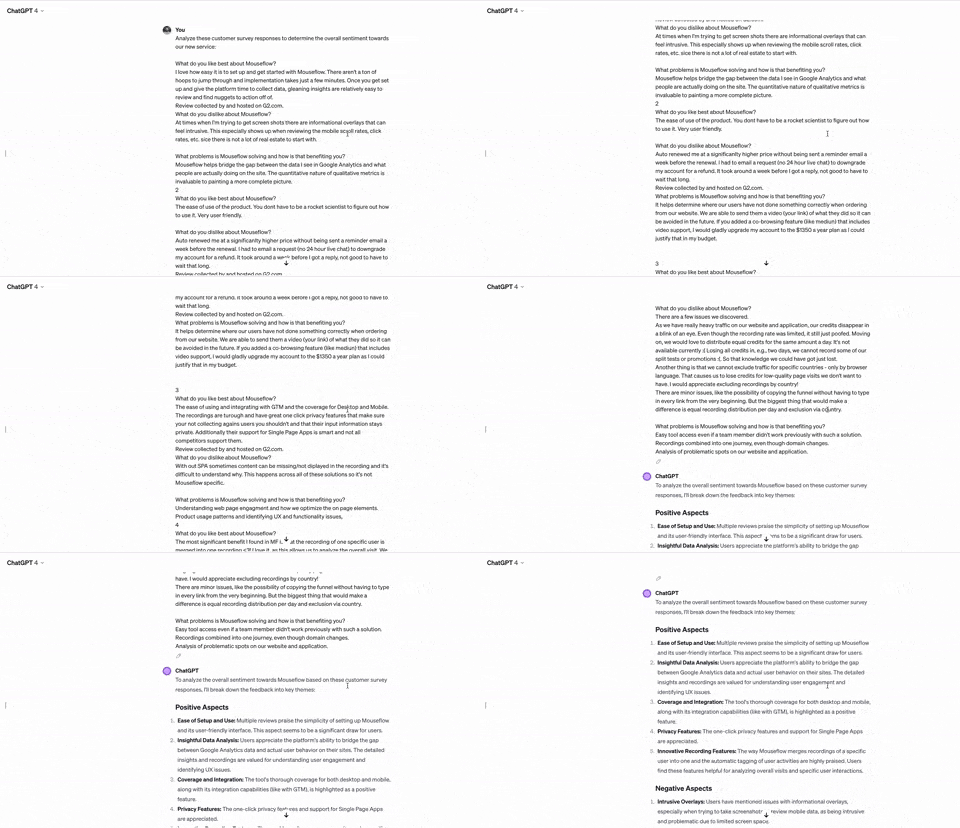
Here’s how ChatGPT responds to our sentiment analysis prompt
Can ChatGPT estimate NPS or CSAT from text feedback?
If you collected only text feedback, without numerical values to calculate metrics such as NPS or CSAT, ChatGPT can help estimate them based on sentiment. Here are the prompts that you can use for that:
“Please estimate CSAT score based on the following feedback”
“Please estimate NPS based on the following feedback”
In our experience with feeding ChatGPT feedback reviews from G2, the estimates seemed to be very close to real numbers. But they’re still estimates, so they should be taken with a grain of salt. It’s of course much better to collect the values from customers, without playing the guessing game.
What is text mining in customer feedback?
Text mining focuses on extracting patterns and themes from large volumes of feedback. Instead of reviewing each response manually, you can use ChatGPT to identify recurring issues, suggestions, and areas for improvement.
This is especially valuable when dealing with open-ended responses, where insights are often buried in unstructured data.
By grouping similar responses together, text mining helps teams prioritize what matters most and uncover opportunities that might otherwise go unnoticed.
Best ChatGPT Prompts for Text Mining
For text mining, consider prompts such as:
“Identify the main themes in these customer survey responses.”
“Summarize the key concerns from these feedback survey responses.”
“Create a word cloud out of the following survey responses and share an analysis of what stands out”
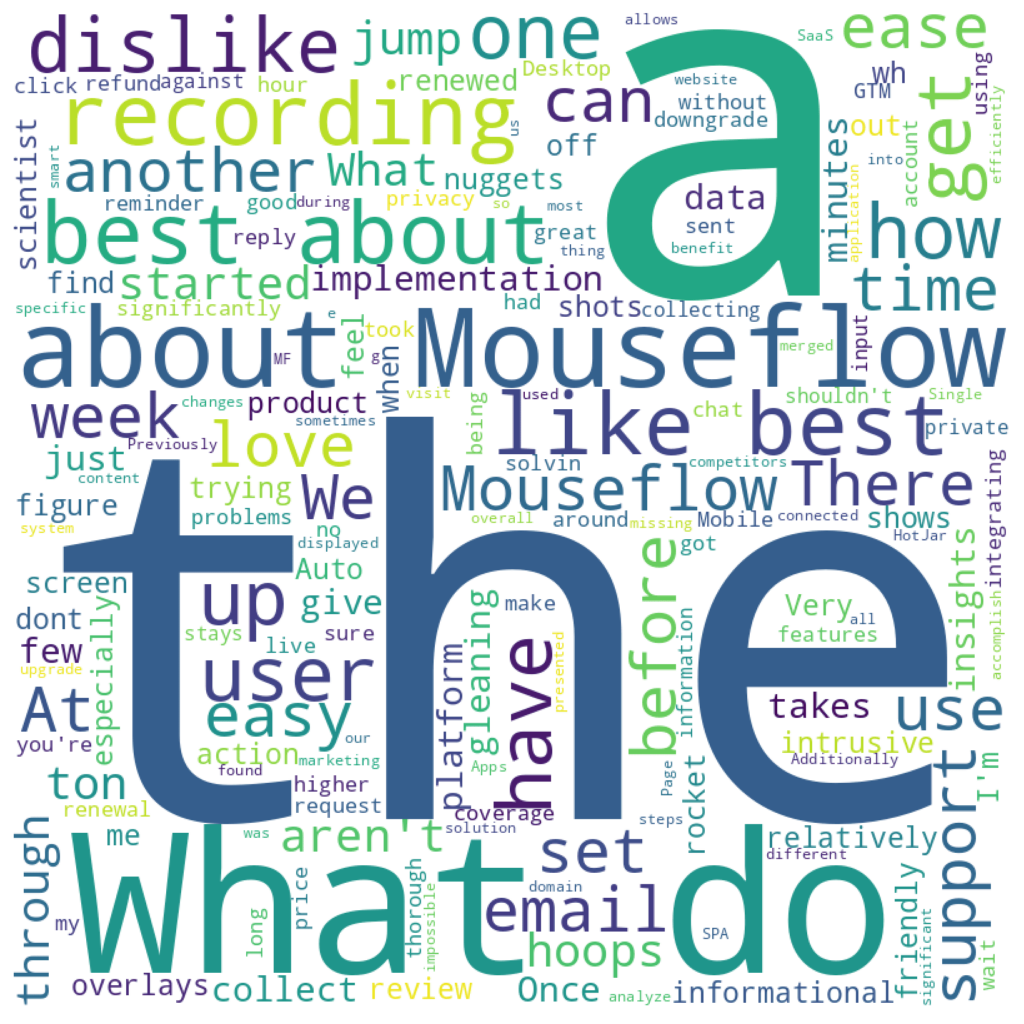
Note: You’ll need access to ChatGPT to generate images with it
You can tweak prompts to get better results. For example, instead of the last prompt, to get a better word cloud, you may want to run this instead:
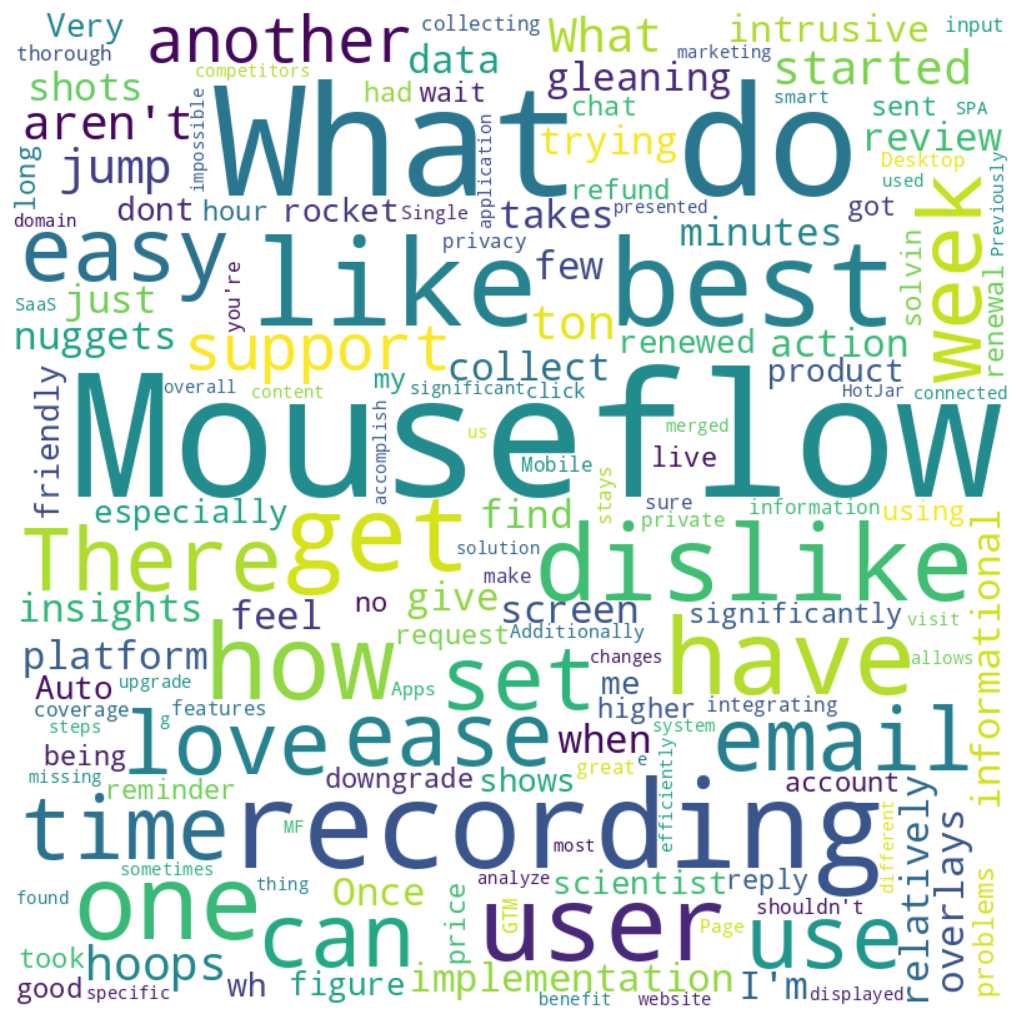
“Create a word cloud out of the following survey responses, removing words like articles and prepositions”
Notice the cleaner results that we got with the tweaked prompt:
However, it’s worth noting that overly complex prompts can slow down processing or lead to incomplete results. Keeping prompts focused and structured tends to produce more reliable insights.
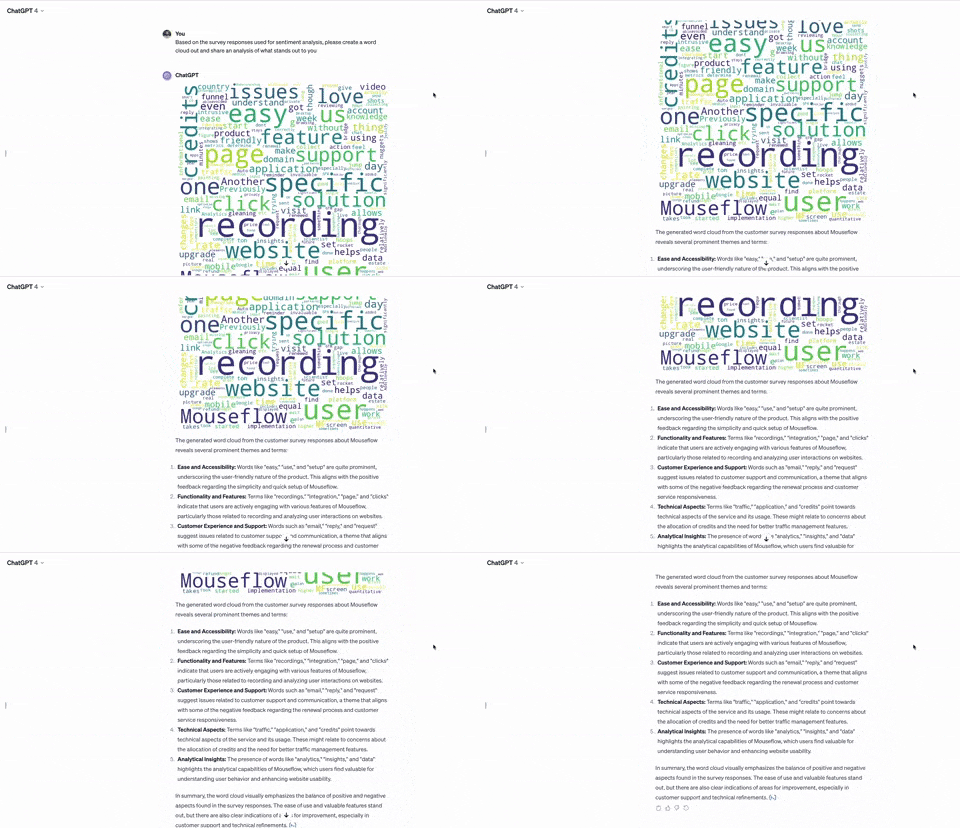
Here’s how ChatGPT responds to our feedback text mining prompt
What are the limitations of AI sentiment analysis?
While ChatGPT is powerful, it has limitations.
Sentiment analysis simplifies complex feedback into broad categories, which can miss nuance. It may struggle with sarcasm, mixed sentiment, or context-specific language.
Results also depend heavily on prompt quality. Vague prompts often lead to vague outputs.
Most importantly, sentiment analysis does not replace human interpretation. It should be used to support analysis, not as the only source of insight.
Conclusion
Tools like ChatGPT help simplify analyzing customer feedback by automating sentiment analysis and text mining. This makes it easier to identify patterns and extract insights at scale.
To make feedback even more actionable, it’s also important to ask the right questions, and learn when and where to request feedback.
Knowing about all the types of user feedback also won’t hurt.
When used as part of a structured workflow, ChatGPT helps teams move faster, prioritize better, and improve customer experience based on real user insight.