Most B2B buyers have already decided who they’re talking to before they ever fill out a form. They’ve visited your pricing page three times, read two case studies, and compared you to two competitors. And you had no idea any of it was happening.
That’s the dark funnel. And according to Jillian Als, CMO at Leadfeeder, it’s where most deals are actually made, long before a hand gets raised.
In the latest episode of Converting Talks by Mouseflow, I sat down with Jillian to talk about anonymous website traffic, intent signals, and

Most buying signals go completely unnoticed
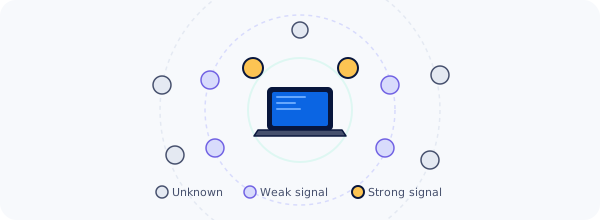
The first thing Jillian said that stuck with me: B2B companies are generating far more buying signals than they act on. The signals are there. Most teams just haven’t figured out how to operationalize them.
Part of the problem is noise. If you’re getting notified every time any company visits your website, the alerts become meaningless fast. Students, researchers, misread IPs: it all blurs together. The signal gets buried.
The fix isn’t more data. It’s smarter filtering. Which companies fit your ICP? How many people from a single company are visiting? Which pages are they hitting, and how often are they coming back? One pricing page visit is a data point. Five visits from three people at the same company over two weeks is a signal.
“It’s not just one pricing page visit that matters. It’s a collection of signals. And then, because you’re not sending noise and you’ve established some sort of internal handover SLA, and sales sees that it actually helps them close deals better, faster, for more money, then you can make it an actual lead generation model for your business.”
At Mouseflow, we see the other half of this picture. Knowing which companies are on your website is powerful. Knowing what they’re doing when they get there is what turns that into something you can actually act on. Session recordings show you where visitors hesitate, where they drop off, and which pages hold their attention longest. Heatmaps tell you what’s drawing the eye and what’s being ignored. Together, the who and the what stop being separate questions.
The rebrand that forced a hard conversation
Leadfeeder wasn’t always Leadfeeder, at least not recently. The product went through a merger that turned it into Dealfront, a broader sales intelligence platform, before the team made the decision to come back to the Leadfeeder name and double down on marketers as the primary persona.
Jillian joined right in the middle of that transition, and she’s honest about what it took. The rebrand wasn’t just a domain change and a new logo. It was a company-wide reckoning about who they were building for, what their actual competitive moat was, and what it would cost to run two narratives at once.
“You can run two things at once, but it just makes every dollar need to work harder, and you have to make trade-offs. There’s no such thing as being all-in on both.”
The SEO hit was real. The brand confusion lingered. July was, in her words, “a bit of a mess.” But by the end of Q3, something had shifted. Branded search was up. Conversion rates were improving. The product qualified leads that actually mattered were trending in the right direction, even as raw traffic numbers were still recovering.
The lesson isn’t that rebrands are worth it or not. You need to be clear on what you’re optimizing for before you start. For Leadfeeder, that meant accepting a rough patch in exchange for a cleaner story and a tighter ICP fit.
Pipeline vs. leads: a word choice that reveals everything
One of the more unexpected moments in our conversation was a debate over a single word: pipeline.
When Jillian arrived at Dealfront, the website called it a “pipeline generation platform.” She pushed back. Not because pipeline isn’t the goal (it is), but because that’s not the language a marketer uses when they’re lying awake at 2am.
Marketers are still asked for leads. They’re still measured on volume, on MQLs, on what’s coming in at the top of the funnel. Using the language of sales on a website aimed at marketers creates a disconnect, a small one, but enough to make someone feel like the product isn’t quite for them.
They changed it to leads. It seems minor, but it wasn’t.
This is the kind of thing that only becomes obvious when you’re genuinely selling to yourself. Jillian is a CMO selling to CMOs. That perspective, knowing exactly what keeps your persona up at night, is an advantage most B2B teams never fully use.
What AI is actually changing about buyer intent
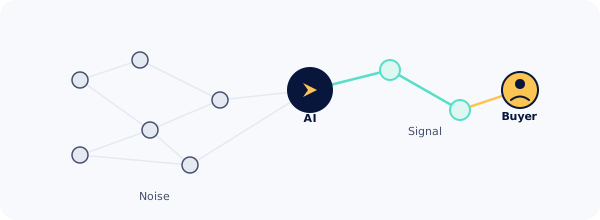
We ended the conversation where a lot of conversations end up these days: AI. Jillian’s take was grounded. AI is making buyers more informed, faster. They’re comparing options, validating choices, and shortlisting vendors before a single sales conversation happens. The dark funnel just got darker.
But it’s also an opportunity. The same AI that’s helping buyers research is available to sellers. Getting context on a company before they reach out, funding rounds, recent press, trigger events, used to take hours. Now it takes seconds. The teams that build that into their workflow will close more, faster.
The spray-and-pray era of AI outreach, she implied, is already running out of steam. What comes next is orchestration: using AI to do the right thing with a signal, not just anything.
Listen to the podcast
Leadfeeder tells you who is on your website. Mouseflow tells you what they’re doing when they get there. Put them together and you stop guessing about intent. You start seeing it.
🎙️ Episode 6 of Converting Talks by Mouseflow, “The Dark Funnel Is Where Deals Are Made” with Jillian Als is live now: podcast.mouseflow.com