
Automotive website optimization helps dealerships increase leads and sales by identifying the exact points where car buyers experience friction online. Using behavior analytics tools like session replays, heatmaps, funnel analysis, and form analytics, dealerships can uncover why shoppers abandon inventory searches, hesitate on financing pages, or drop off before submitting a lead form and fix those issues before they impact revenue.
Most dealership websites already attract traffic. The challenge is understanding what happens after the click.
A car buyer today visits an average of 4.5 websites before stepping into a dealership. They’re doing serious research, comparing models, running payment scenarios, checking inventory. Yet most automotive websites lose them somewhere in that journey, quietly, with no clear explanation why.
While the examples in this article focus on dealership websites, many of the same optimization principles apply across ecommerce experiences more broadly. If you’d like to learn more about ecommerce optimization strategies beyond the automotive industry, click here.
Below are five behavior analytics fixes that help dealerships reduce friction, improve the online buying experience, and convert more website visitors into qualified leads.

Understanding the automotive buying journey
Before diving into the fixes, it helps to understand where friction usually appears in the automotive buying journey online.
Most shoppers follow a fairly predictable path: they land on a homepage or paid ad, browse inventory, apply filters for price or model, open a vehicle detail page (VDP), interact with financing or payment tools, and eventually decide whether to contact the dealership.
The problem is that every step in that journey creates an opportunity for hesitation.
Some users abandon the experience after a confusing inventory search. Others leave after struggling with filters, revisiting financing information multiple times, or stopping halfway through a lead form. Funnel analysis helps identify where those drop-offs happen, while session replays reveal the behavior behind them – the repeated click on an unresponsive filter, the back-and-forth scrolling between pricing and specs, the moment a shopper pauses before abandoning a form.
In automotive UX, the most important question usually isn’t where users leave. It’s what they were trying to do right before they left.
That’s what behavior analytics makes visible.
When you combine those insights with on-site feedback like exit surveys or embedded polls, you move beyond surface-level metrics and start understanding both the behavior and the motivation behind it. That’s what turns behavioral data into something genuinely actionable.
5 Ways to Reduce Friction
The most effective automotive website optimizations rarely come from full redesigns. More often, they come from identifying small moments of friction that quietly interrupt buyer momentum.
Behavior analytics helps surface those moments in context, where shoppers struggle to narrow inventory results, hesitate around financing information, abandon lead forms, or lose confidence before contacting sales.
The five fixes below focus on some of the most common friction points across dealership websites. Each one is grounded in real shopper behavior and designed to improve the path from vehicle research to conversion.
1. Find your highest drop-off pages before redesigning anything
Not every page deserves equal attention.
On many dealership websites, funnel analysis reveals that a small number of pages are responsible for a disproportionate share of user exits. Sometimes it’s a vehicle detail page (VDP) that buries financing information below the fold. Sometimes it’s an inventory results page with too many competing calls-to-action. In other cases, it’s a landing page that slows shoppers down before they ever reach available inventory.
What makes this especially difficult is that users often appear highly engaged right before abandoning the session.
Session replays frequently show shoppers scrolling carefully through vehicle photos, revisiting specifications, or interacting repeatedly with pricing modules before leaving entirely. The interest is there. The experience is what failed.
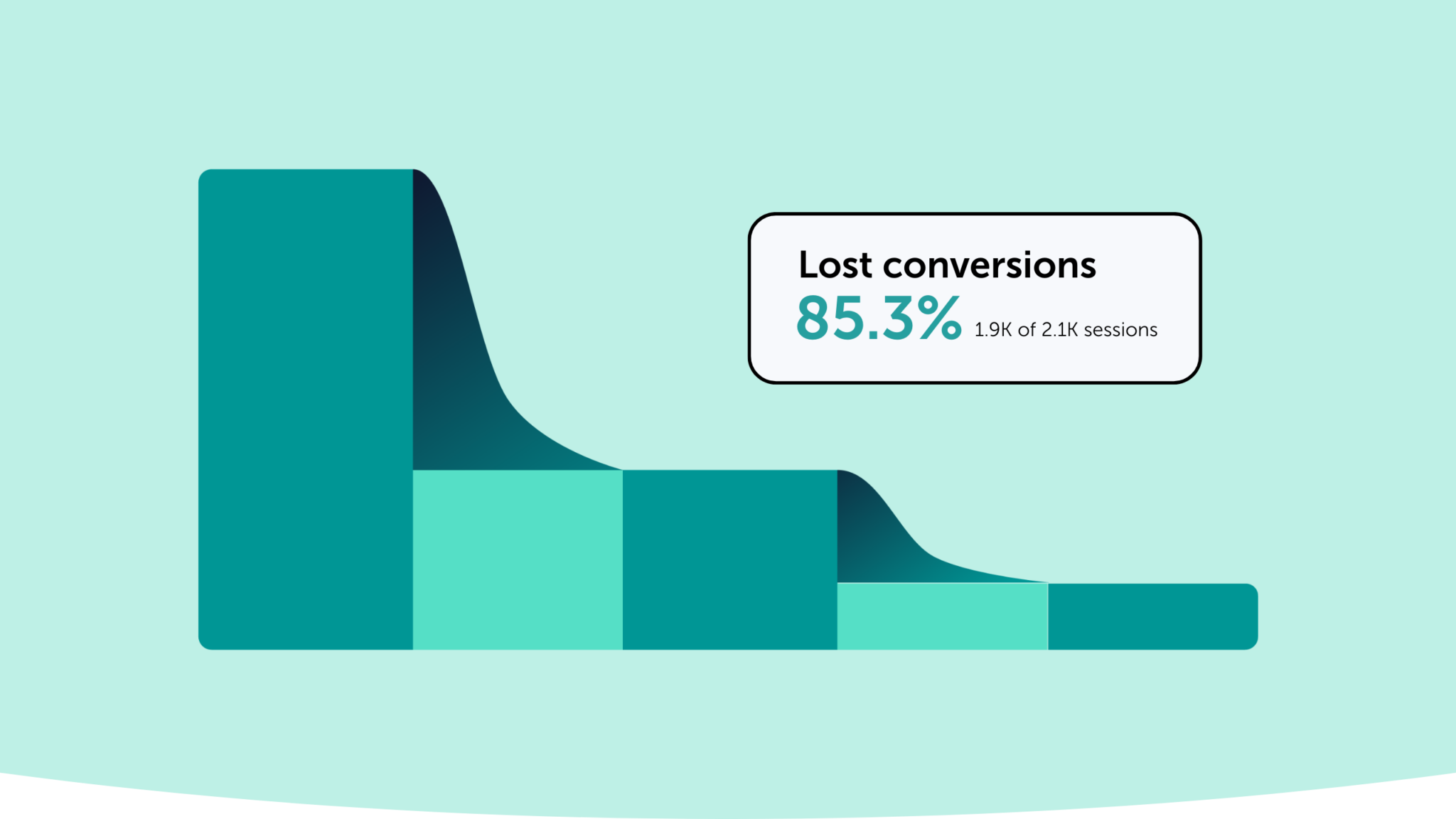
That’s why the most effective optimization work usually starts with understanding where journeys collapse, not redesigning pages based on assumptions. Conversion funnels help identify where users drop off at scale, while heatmaps reveal whether critical page elements are actually being seen and engaged with.
The goal isn’t to change everything at once. It’s to remove friction at the precise moment where buyer intent starts weakening.
2. Reduce inventory search friction so shoppers find vehicles faster
Inventory search is the core job of a dealership website. If shoppers struggle to narrow down vehicles that match their budget, payment expectations, mileage preferences, or body style, the experience breaks down quickly.
This becomes even more important on mobile, where inventory browsing often happens in fragmented moments throughout the day. A shopper comparing certified pre-owned SUVs during a lunch break behaves very differently from someone researching lease offers on a desktop at home, yet many dealership sites force both users through the same rigid search experience.
Behavior analytics makes those friction points visible.
Click heatmaps often reveal that certain filters receive overwhelming engagement while others are almost completely ignored. In many dealership funnels, monthly payment filters generate stronger engagement than total vehicle price filters, especially among mobile users. That’s a meaningful behavioral signal. It tells you how shoppers are actually evaluating affordability in practice, not how dealerships assume they are.
Session replays also surface smaller issues that traditional analytics completely miss: rage clicks on broken dropdowns, repeated taps on non-clickable elements, slow-loading inventory modules, or filter resets that force users to restart searches from scratch.
These aren’t cosmetic UX issues. They directly interrupt buying momentum.
The dealerships creating smoother inventory experiences are usually the ones removing unnecessary complexity, prioritizing the filters shoppers actually use, and reducing the effort required to compare vehicles quickly.
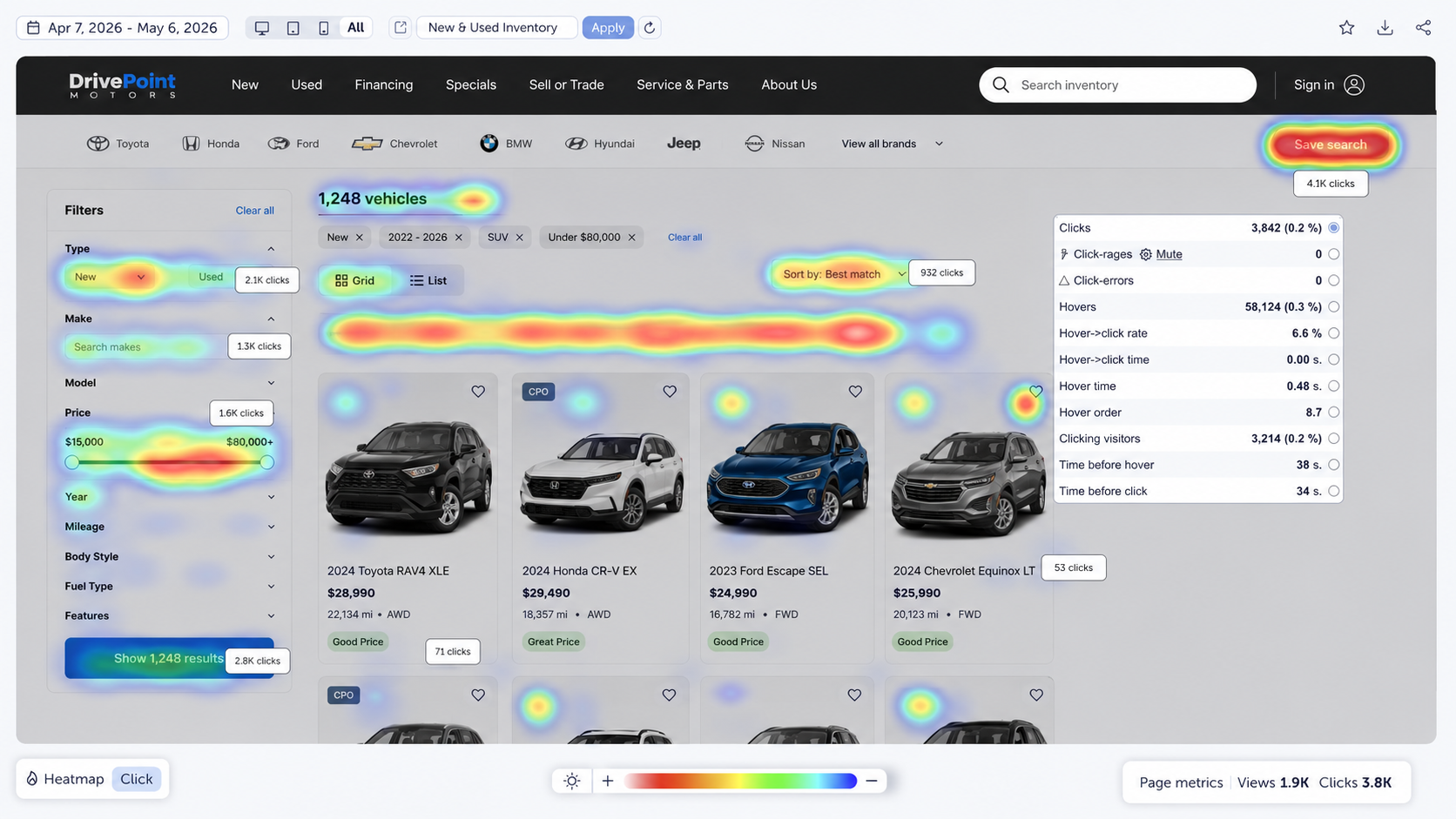
Click Heatmaps reveal which inventory filters shoppers engage with most, helping dealerships prioritize the search options that actually influence buying decisions.
3. Make pricing and financing information easier to understand
Automotive purchases carry financial uncertainty by default. Buyers want clarity long before they want a conversation with sales.
When pricing details are fragmented across tabs, financing estimates are difficult to locate, or trim-level differences require excessive scrolling to compare, users begin hesitating. Session replays on VDPs frequently show shoppers moving back and forth between pricing sections, financing tools, and vehicle specifications trying to piece together a complete picture before taking action.
That behavior is a warning sign.
It usually indicates that the page structure is forcing users to work harder than they should to understand affordability and value.
On many dealership websites, financing tools are technically available but visually deprioritized. Payment estimates may appear too far down the page, reload inconsistently, or compete with secondary promotional modules that distract from the actual buying decision.
Scroll maps help expose these gaps between design assumptions and real user behavior. Teams often discover that important financing content sits far below the area where meaningful engagement actually happens.
Small adjustments can materially improve clarity: surfacing monthly payment estimates earlier, simplifying trim comparisons, keeping inventory availability visible during scroll, or reducing the number of interactions required to access financing information.
Buyers don’t need every answer immediately.
But they do need enough clarity to continue moving forward confidently.
Scroll Heatmaps show how far shoppers actually navigate down a vehicle detail page, revealing whether pricing, financing, and key vehicle information are being seen before users drop off.
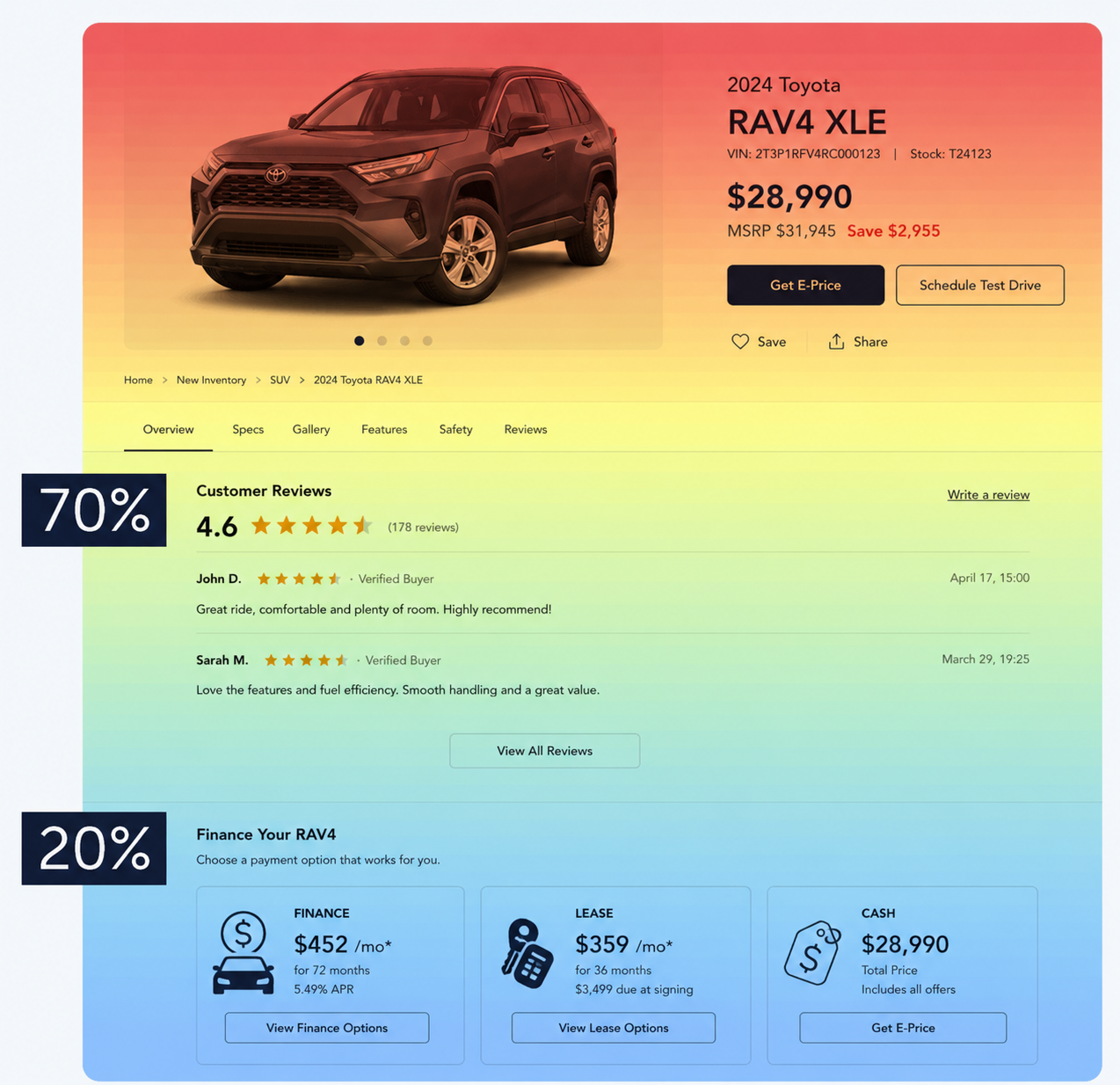
Scroll Heatmaps reveal whether shoppers are actually seeing pricing, financing, and key vehicle information before dropping off.
4. Shorten lead forms and reduce commitment pressure
Lead forms are where dealership intent and user hesitation collide most directly.
Automotive lead forms frequently ask for more information than buyers are ready to provide, especially during the research phase. Form analytics consistently show abandonment increasing as forms become longer, more demanding, or more sales-oriented too early in the journey.
Phone number fields are one of the clearest examples.
Many shoppers are comfortable requesting pricing details or availability updates through email, but hesitate the moment a form signals immediate sales contact. Session recordings often show users beginning forms confidently, pausing at the phone field, then abandoning the process entirely.
The issue isn’t necessarily distrust. It’s timing.
Buyers researching inventory online are often still evaluating options across several dealerships simultaneously. Forcing high-commitment interactions too early creates friction precisely when users are looking for flexibility and low-pressure exploration.
Form analytics helps identify which fields consistently create hesitation, abandonment, or repeated corrections. In many cases, reducing forms to the minimum information needed to continue the conversation dramatically improves completion rates.
The strongest-performing dealership forms usually feel less like a sales handoff and more like a continuation of the shopping experience.
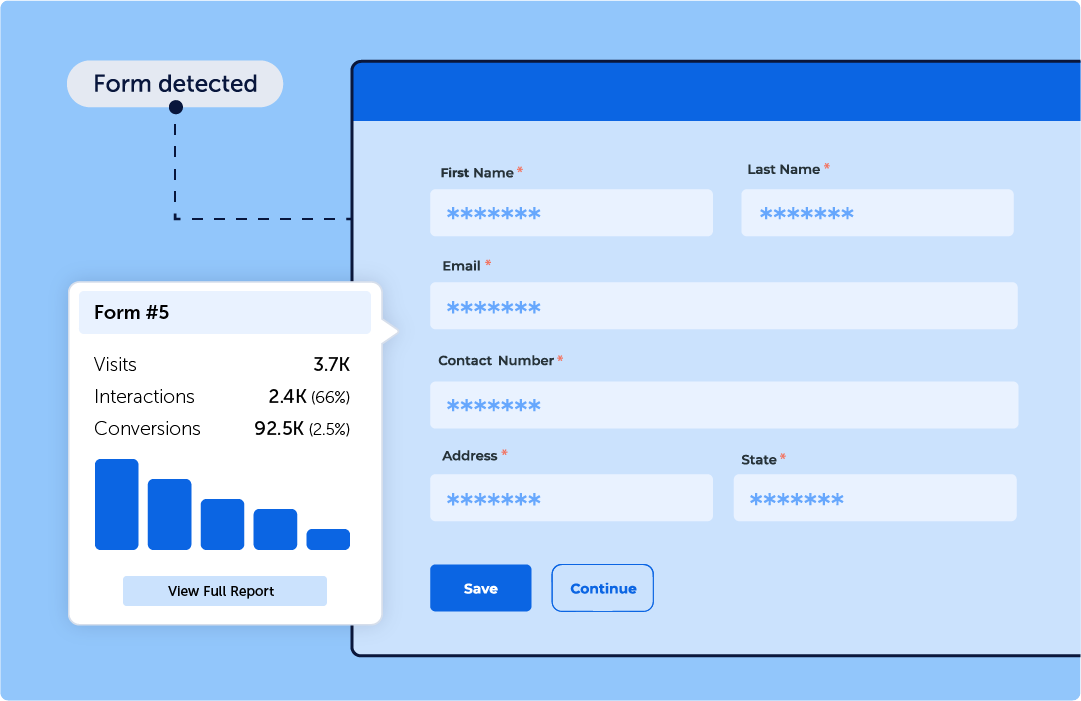
Form Analytics helps dealerships identify exactly where shoppers abandon lead forms, hesitate on specific fields, or drop off before completing a financing or contact request.
5. Add reassurance where shopper hesitation appears
Not every abandoned interaction comes from usability problems. Sometimes buyers simply need more confidence before taking the next step.
Behavior analytics makes these moments surprisingly visible.
You’ll often see users revisiting financing details multiple times, hovering over contact buttons without clicking, or repeatedly comparing similar vehicles before leaving the session. Across thousands of dealership visits, these hesitation patterns become easier to identify at scale.
Reviewing that volume of behavioral data manually can quickly become overwhelming, which is where AI-assisted analysis becomes valuable. Mina AI helps surface recurring patterns automatically, highlighting moments where users appear uncertain, frustrated, or disengaged across inventory searches, financing flows, and lead generation paths.
These insights create opportunities for much more targeted reassurance.
Instead of relying on generic trust badges scattered throughout the site, dealerships can place confidence-building elements precisely where uncertainty appears: a transparent financing explanation next to payment tools, a “no-obligation inquiry” message beside lead forms, or a visible response-time expectation near contact CTAs.
Small reassurance signals tend to perform best when they respond directly to observed hesitation.
The closer trust aligns with actual user behavior, the more effective it becomes.
Stop guessing and start optimizing the real buyer journey
The dealerships creating better digital experiences aren’t necessarily the ones investing the most in traffic acquisition.
They’re the ones understanding what happens after the click.
Behavior analytics gives dealership teams visibility into the exact moments where buyers hesitate, disengage, abandon inventory searches, or lose confidence before submitting a lead. Instead of redesigning experiences based on assumptions, teams can prioritize fixes grounded in real buyer behavior.
Dealership websites aren’t competing for clicks anymore.
They’re competing for confidence.
Every smoother inventory search, every simplified financing interaction, and every reduced point of friction increases the likelihood that an online shopper eventually becomes a showroom visit.
Automotive website optimization FAQs

Automotive website optimization is the practice of using behavior analytics like session replays, heatmaps, and funnel tracking to identify and fix friction points on dealership websites, ultimately turning more browsers into test drives and buyers.
Behavior analytics removes the guesswork by showing exactly how users interact with your site. It highlights rage clicks on broken filters, drop-offs in financing forms, and hesitation on vehicle detail pages, allowing you to fix issues that directly impact sales.
Car buyers typically abandon lead forms due to excessive friction. Form analytics often reveal that asking for too many fields, especially a phone number too early in the research phase, creates distrust and drives potential leads away.
The best tools for automotive digital customer experience (CX) combine quantitative and qualitative data. Mouseflow provides a comprehensive suite including Session Replay, 7 types of Heatmaps, Conversion Funnels, Form Analytics, and frictionless feedback surveys.
Beatriz Andrade is a Campaign Marketing Manager at Mouseflow, where she develops and executes campaigns to drive growth for one of the leading behavioral analytics platforms.